+ Add to your favorite list

The Signs of the Reappearance(7)
×
![]()
In the series of articles on Mahdism, efforts will be made to present a complete, coherent, and reasonable picture of the definite signs of the Reappearance and the events related to the geography of the era of the Reappearance, relying on Islamic narrations and traditions. The minimum outcome of this endeavor is that researchers will be able to distinguish documented materials from undocumented ones in discussions on Mahdism, and refrain from relying on undocumented materials when making judgments and analyses
Sufyani, the First Certain Sign of the Reappearance
In the fifth article, the necessity of knowing the certain signs of the reappearance was mentioned. In the sixth article, the question was answered as to whether in the signs of the reappearance, and especially in the certain signs of the reappearance such as Yamani, Sufyani, and so on, the possibility of change or even non-occurrence is conceivable or not.
Now we will introduce the first certain sign of the reappearance, Sufyani, and discuss the wide dimensions of this event. It should be noted that in the previous articles, another certain sign of the reappearance, namely Yamani, was introduced.
A Scientific Approach to the Jurisprudence of the Signs of Reappearance
Before beginning the detailed presentation and introduction of Sufyani as the first enemy of Imam Mahdi (Peace be upon him), in this writing and scholarly investigation, we will insist on the correct scientific path. Among the points:
1.
It should be noted that sometimes the narrations of the Ahl al-Bayt(The Household of the Prophet) and the Imams interpret each other. In such a way that if there is ambiguity or conciseness in a narration, it may be possible to find its interpretation and elaboration in another narration or narrations. Therefore, related narrations should be examined alongside each other.
2.
Citation of the narrations of the Ahl al-Sunnah is only valid and correct when its content exists in the narrations of the Ahl al-Bayt. Referring to the narrations of the Ahl al-Sunnah as supporting Shiite narrations is not objectionable. Therefore, proving a matter based on the narrations of the Ahl al-Sunnah, without attention to the narrations of the Ahl al-Bayt, is not correct.
(
Site Administrator's Note: The reason Shiites do not refer to the narrations transmitted from the Ahl al-Sunnah is related to two different perspectives of the Shiites and the Ahl al-Sunnah regarding the sources and chains of narrators of hadith:
a -
In the Shiite school, the main authority after the Prophet of Islam rests with the Imams of the Ahl al-Bayt (peace be upon them).
That is, a narration in which at least one infallible (an Imam, the Prophet himself, or his esteemed daughter) is present in the chain of transmission is considered authentic, because the Shiites believe that the Ahl al-Bayt (peace be upon them) are the inheritors of the Prophet’s knowledge and free from error. Therefore, even if a narration exists in the sources of the Ahl al-Sunnah, until it reaches one of the infallibles, it does not gain significant authority in Shiite theological and jurisprudential reasoning.
b -
The Ahl al-Sunnah grant a special status to the Companions. The principle of "justice of the Companions" in their view leads to all Companions being assumed just; therefore, any narration ending with one of the Companions is considered authentic. This is why, in the hadith sources of the Ahl al-Sunnah such as Sahih al-Bukhari and Sahih Muslim, most narrations, instead of ending with the Ahl al-Bayt, reach Companions such as Abu Huraira, Abdullah ibn Umar, Anas ibn Malik, etc.
Why the Shiites Do Not Cite These Narrations? The Shiites do not accept the principle of “justice of all the Companions”; rather, they believe that each narrator must be examined individually. Shiites hold that the knowledge of religion must be derived from those who are infallible and divinely appointed, namely the Ahl al-Bayt (PBUT).
Narrations transmitted solely by Companions without the presence of an infallible do not provide sufficient certainty for Shiites, because there is a possibility of error, oversight, or even political motives in the transmission of hadith.
The term Companion among the Ahl al-Sunnah applies to anyone who has seen the Prophet (PBUH) while being a believer and has died in Islam. Even seeing the Prophet once is sufficient, even without close companionship or discipleship. The only condition is that at the time of the meeting, the person was a Muslim and died in Islam. Even if some Companions fought against other Companions and killed them, both the killer and the killed are considered just by the Ahl al-Sunnah. If a mistake occurs, it is considered an error of ijtihad, not corruption or treachery. Thus, someone who correctly exercises ijtihad receives two rewards, and the one who errs receives one reward, even if the erring person has unjustly shed the blood of many innocents.)
3. In assessing the authenticity of a narration, all indications, including contextual and textual evidence, must be considered. It is not sufficient to examine only the chain of transmission (isnad) while neglecting the other narrational clues.
4.
In studying the signs of the reappearance, weak narrations are not cited. However, weak narrations are not necessarily false; they may indeed be authentic but have not reached us through a reliable chain in the present era. One method to verify a weak narration is the occurrence of the event it describes, which indicates its correctness.
5.
To establish a matter as a sign of the reappearance, there is no room for leniency in the supporting evidence, but there may be leniency in the details and specifics.
6.
Specifically in discussions of Mahdism, it must be noted that the narrations of Mahdi, particularly the certain signs of the reappearance, are considered pieces of a single puzzle and should not be studied in isolation. Examining the certain signs independently will not lead to accurate and desirable results. If in a scientific investigation we focus on only one sign, we may conclude that this sign has occurred in the past or that similar signs may recur multiple times in the future. However, if we consider the collection of signs together, as pieces of a single puzzle, we will reach a more accurate and realistic conclusion.
For example, whenever the narrations regarding the destruction of the Levant are considered in isolation, one may immediately conclude that this event occurred in the past. However, if the narrations of the “destruction of the Levant” are examined alongside the collection of other events and signs, the conclusion will differ.
If the narrations regarding the destruction and devastation of the Levant are placed alongside other narrations, including the narration of Imam al-Baqir (PBUH), which states that after the destruction of the Levant, the “two flags” conflict will occur in the region, followed by the emergence of yellow flags from the west of the Levant after an earthquake, then the sinking of the earth in the Harasta area of Syria, and subsequently the emergence of Sufyani, then the understanding of the events and signs of the reappearance for arriving at the truth and making decisions becomes easier.
At the next and higher level, if the events in the Levant and the narration of Imam al-Baqir are also considered alongside other signs, such as the establishment of a preparatory government for the reappearance by “men from the people of Qom,” the existence of a Khorasani leader and commander in Iran, the presence of a king of Hijaz named Abdullah, the death of Abdullah and the disputes of the Bani Fulan in Saudi Arabia, as well as the presence of a weak Shia government in Iraq, along with the movements of the Kurds and Turks, the activities of Takfiri groups in Syria and the Levant region (including Syria and parts of Lebanon, Jordan, and Palestine), and the conflict of flags—all of which are clearly and explicitly mentioned in the narrations and hadiths as signs of the reappearance—then a clearer understanding of the narrations and hadiths is achieved.
By placing related and “family” narrations together, it becomes evident that what is occurring in the present era, which we witness with our own eyes, has a strong reflection in the hadiths regarding Mahdism and this strengthens the probability that we are living in the era of the reappearance. Of course, in this writing, we do not aim to determine or interpret the signs of the reappearance at will, but never in any period of history have all the signs of the reappearance, occurring in the present era, been so aligned and considered together.
“They perceive it as distant, while We see it as near” (Holy Quran, Surah Al-Ma’arij, verses 6–7).
7. Certainly, the collection of events and the certain signs of the reappearance must be examined together. Examining them separately and independently and attempting to match them causes serious harm, as it creates excitement and false feelings that negatively affect the spirit and motivation of the followers awaiting the reappearance of Imam Mahdi. Therefore, according to the instructions of the infallible Imams, the reappearance should always be considered near, and at the same time, while avoiding setting a specific time for it, one must refrain from hastening the matter of reappearance and demanding it before its appointed time, especially before the occurrence of the certain signs, notably the heavenly call—which will occur in the month of Ramadan and be heard by all the people of the world. As emphasized in the narrations transmitted from the Ahl al-Bayt:
“…deny those who set a time for the reappearance; those who hasten the matter of the reappearance will be destroyed, and those who patiently await the occurrence of the certain signs of the reappearance will be saved.”
(1)
Questions About Sufyani
Many questions have been raised regarding the character of Sufyani, including:
• What is the name and lineage of Sufyani? Is he truly a descendant of Muawiyah ibn Abi Sufyan?
• When will Sufyani emerge?
• Where will Sufyani rise? Is it really from the country of Syria and the Levant region?
• Who are the supporters of Sufyani?
• Which territories will Sufyani conquer?
• Will Sufyani become the ruler of Syria after his uprising?
• Will Sufyani attack Iraq?
• Is the color of Sufyani’s flag really black? And does every black flag from Syria indicate Sufyani?
• What are the objectives of Sufyani’s uprising, and which territories will he control?
• Will Sufyani, in addition to the Levant region, also dominate Iraq and Saudi Arabia?
• What is the religion, sect, and orientation of Sufyani?
• What is the course and duration of Sufyani’s actions?
• What will be the outcome of Sufyani’s uprising?
• Why is Sufyani’s flag considered the most misleading flag of the era of reappearance?
• Is Sufyani’s flag the only false flag in the era of reappearance?
• What is the duty of the Shiites toward Sufyani?
• What is the time interval between the emergence of Sufyani and the reappearance of Imam Mahdi (PBUH)?
• Throughout the history of Islam, who were the false claimants of Sufyani?
• In the contemporary era, who has claimed to be Sufyani, and how can their claims be verified?
It should be noted that in the series of articles “Mahdism Studies,” with an emphasis on a scientific approach and the understanding of hadith, in addition to examining the narrators and chains of transmission (Ilm al-Rijal and Isnad) of the narrations, as well as other indications and related “family” narrations, an effort will be made to provide scientific answers to the above questions.
Introduction of the Certain Signs of Reappearance
In Islamic narrations, five certain signs of the reappearance (Yamani, Sufyani, the heavenly call, the martyrdom of The Pure Soul, and the sinking in al-Bida) are mentioned specifically and independently. The importance of these five signs can be understood both from the abundance of narrations regarding them and from their separation and independent presentation.
Sheikh Saduq, in his book Kamal al-Din((Perfection of religion)), with a chain of transmission from Imam al-Sadiq (PBUH), has narrated in an authentic hadith(2):
“Before the rise of Imam Mahdi, there are five certain signs: Yamani, Sufyani, the heavenly call, the martyrdom of The Pure Soul, and the sinking in al-Bida.”(3)
Furthermore, the late Al-Kulayni, in his book Al-Kafi, has narrated from Imam al-Sadiq (PBUH) in an authentic hadith(4):
“Before the rise of Imam Mahdi, there will be five signs: the heavenly call, Sufyani, the sinking of the army (of Sufyani) in the land (of al-Bida), the martyrdom of The Pure Soul, and Yamani.”(5)
These two authentic hadiths and other similar narrations indicate that the reappearance of Imam Mahdi (PBUH) is dependent upon the occurrence of the certain signs, which must take place.
Brief Explanation of the Certain Signs of Reappearance
According to authentic narrations, the heavenly call serves to prove that Imam Mahdi has been chosen and sent by God Almighty, while the emergence of Sufyani as the main enemy of Imam Mahdi points to the struggle between truth and falsehood. The emergence of Yamani refers to the necessity of having the forces and army of the side of truth and providing support for the reappearance of Imam Mahdi. The martyrdom of The Pure Soul refers to the rebellion of the Nusayri regime and the enemies of the Ahl al-Bayt in the land of Hijaz (Saudi Arabia). Finally, the sinking of Sufyani’s army into the earth in the region of al-Bida (between Mecca and Medina) indicates the truth of the prophecy and the veracity of the Prophet’s report, and also demonstrates that the global government of Imam Mahdi is the continuation of the governance of the Messenger of Allah and the completion of the Prophet’s mission.(6)
The Great Importance and Status of Sufyani’s Rebellion in the Era of Reappearance
The reasons that demonstrate the significance of the issue of Sufyani are as follows:
1.
The emergence of Sufyani, in Shia narrations, is counted among the certain signs of the reappearance of Imam Mahdi (PBUH). For example, Sheikh Saduq in Kamal al-Din, in a narration from Imam al-Sadiq (PBUH), reports:
“Sufyani is among the certain signs, and his uprising will occur in the month of Rajab.”
(7)
Similarly, Imam al-Baqir (PBUH) has stated in another narration:
“Some matters are conditional and dependent, and some are certain and unchangeable, and Sufyani is among the certain signs that will undoubtedly occur.”
(8)
Also, in Al-Ghaybah of Nu‘mani, Imam al-Baqir (PBUH) has interpreted the verse: “Then for your lifetime He has appointed a term, and there is a fixed and certain term with Him”
(9) as follows:
“There are two kinds of terms: a certain and unchangeable term, and a conditional and dependent term. Hamran asked: What is the certain term? He said: A term that cannot be other than it. Hamran asked: What is the conditional and dependent term? He said: That which God wills in its path and can be advanced, delayed, or removed. Hamran said: I hope the uprising of Sufyani is among the conditional signs in which Bada’ may occur! The Imam replied: By God, it is not so; he is among the certain signs.”
(10)
2.
As will be explained, one of the fundamental objectives of Sufyani’s uprising is the attack on Shia-populated regions, the killing of Shias, and the assault on Shia holy sites in Iraq. The impact of this immense event on the Shia community and the threat posed by Sufyani to Shias worldwide makes examining its dimensions and understanding its various aspects essential.
Sufyani initially emerges from the Levant. Sheikh Saduq in Kamal al-Din, narrates from Imam al-Baqir (PBUH):
“…and Sufyani will emerge from the region of the Levant…”
(11)
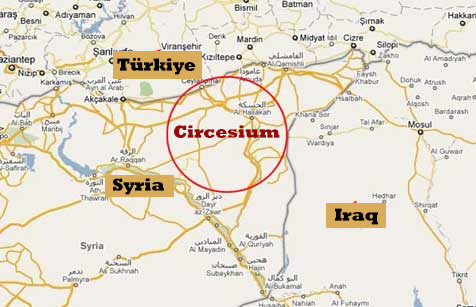
Then, he marches toward Iraq. In Al-Ghaybah of Nu‘mani, Imam al-Baqir (PBUH) narrates in an authentic hadith:
“…then he (Sufyani, after taking control of the Levant) has no objective other than attacking Iraq. He brings his army to Qarqisiya(Circesium) and engages in fighting there… and then sends his army toward Kufa…” (12)
3.
Another reason that makes research on this topic necessary is the extensive dimensions of this event compared to other signs of the reappearance; signs such as the heavenly call, the martyrdom of The Pure Soul, the sinking in al-Bida, etc., are limited events that occur over a short period.
Sufyani’s uprising, however, is not a simple or limited event—it lasts for months and the radius of Sufyani’s activities will include the Levant and Iraq. In Al-Ghaybah of Nu‘mani,
Imam al-Sadiq (PBUH) narrates in an authentic hadith, emphasizing the long duration of Sufyani’s sedition:
“Sufyani is among the certain and definite signs, and he will emerge in the month of Rajab. From the beginning of his movement until the end, it will last fifteen months. Six months will be spent in war and battle, and when he conquers the five lands (the entire Levant region), he will rule these lands for nine months, and not one day will be added to this period.” (13)
4.
Moreover, the impact of Sufyani’s rebellion on the fundamental equations and transformations in the Islamic world—from the Levant to Iraq, including sending armies to Iraq and Saudi Arabia, the destruction of the city of Medina, and the attempt to prevent the uprising of Imam Mahdi and declare open war against him—is part of the dimensions of this important event. Nu‘mani in Al-Ghaybah narrates from Imam al-Baqir (PBUH) in an authentic hadith regarding this matter:
… Sufyani sends an army toward Medina. Imam Mahdi flees from there and goes to Mecca. The commander of Sufyani’s army receives a report that Mahdi has gone to Mecca…
(14)
5.
On the other hand, when the narrators of the Imams’ hadiths asked about the most important sign of the reappearance of Imam Mahdi, the Imams of Ahl al-Bayt presented the emergence of Sufyani as the most important sign for the reappearance of Imam Mahdi and the establishment of the government of Ahl al-Bayt:
“Sufyani is sufficient for the punishment of your enemies and is among the signs for you (to understand the proximity of the reappearance)… and the sedition of Sufyani’s rebellion, God willing, will not exceed nine months.”
(15)
6.
In numerous Shia hadith sources, it is narrated that during Sufyani’s uprising, responding to the call of Ahl al-Bayt and paying attention to the news of the reappearance in the land of Hijaz (Saudi Arabia) is a religious obligation. In Al-Kafi, Al-Kulayni narrates that at the time of Sufyani’s emergence, one should respond to the call of truth from Ahl al-Bayt and Imam Mahdi, and the Shias should focus their attention on the news from the land of Hijaz and the city of Mecca.
In a narration from Imam Ja‘far al-Sadiq (PBUH), it is reported:
Yunus ibn Abi Ya‘fur narrates from Imam al-Sadiq (PBUH) that he said: When Sufyani emerges, he will send two armies, one toward us (Hijaz) and another toward you (Iraq). In this case, hasten toward us (and direct all your attention to the news from the land of Hijaz and the city of Mecca, as it is the place of the reappearance and uprising of Imam Mahdi), even if you endure hardships.
(16)
In another narration from Imam al-Sadiq (PBUH), it is reported:
The narrator asked the Imam: What should we do at the time of Sufyani’s emergence? … The Imam replied: When Sufyani emerges and takes control of the five lands of the Levant, join Imam Mahdi and respond to his call.
(17)
Because Imam Mahdi will rise from the city of Mecca in the land of Arabia, Sheikh Mufid in Al-Irshad narrates:
“…Imam Mahdi (PBUH) will rise on the day of Ashura, which is the day of the martyrdom of Imam Husayn (PBUH). It appears as if I see him on that Saturday when Ashura occurs, standing between the Rukn and the Maqam…”
(18)
(Note from the site manager: Rukn refers to a stone set in one of the four corners of the Kaaba, known as the Hajar al-Aswad, and Maqam refers to the stone on which Prophet Ibrahim (PBUH) stood while building the Kaaba, known as Maqam Ibrahim.)
7.
Sufyani and the heavenly call, as two certain signs of the reappearance, and as separators between the era of occultation and the era of reappearance, affirm the truth of the special connection with Imam Mahdi (PBUH), as mentioned in the blessed letter (Tawqi‘) of the Imam to the last of the Four Deputies, Ali ibn Muhammad al-Samari. Sheikh Tusi in Al-Ghaybah narrates:
“…Whoever claims a special connection or deputyship before the emergence of Sufyani and the heavenly call is a liar, false, and slanderer…”
(19)
8.
Furthermore, the attention of the religious leaders to this sign is another factor that makes its study necessary. Its mention in the hadiths and blessed words of the Prophet Muhammad, Imam Ali, Imam al-Sajjad, Imam al-Baqir, Imam al-Sadiq, Imam al-Kazim, Imam al-Ridha, Imam al-Jawad, and Imam Mahdi, in about one hundred narrations, demonstrates this concern (see Mu‘jam al-Ahadith al-Imam al-Mahdi).
9.
Therefore, with all the details mentioned, Sufyani is considered the most important sign of the reappearance of Imam Mahdi (PBUH), and no other sign of the reappearance can be compared to it. Even the other certain signs of reappearance are in some way connected to this sign, and all the signs, at the threshold of reappearance, are influenced by Sufyani’s rebellion.
It should be noted that Yamani and the Khurasani, as signs of reappearance, fight against Sufyani. In an authentic narration from Imam al-Baqir (PBUH), it is reported:
“…Sufyani sends an army toward Kufa… under such conditions, flags from Khurasan led by the Khurasani appear, traversing the stations at remarkable speed, and among them are some companions of Imam Mahdi (PBUH).”
(20)
Also, the sinking in al-Bida occurs for Sufyani’s army between Mecca and Medina. The late Allama Majlisi in Bihar al-Anwar, citing Tafsir al-‘Ayashi, narrates:
“…until the overwhelming army (of Sufyani) reaches al-Bida (between Mecca and Medina) and sinks into the earth…”
(21)
Even after the heavenly call and shout, as a certain sign of reappearance, the Satanic call is heard under the name of Sufyani.
Finally, according to the noble Tawqi‘ of Imam Mahdi to Ali ibn Muhammad al-Samari (the last deputy of Imam Mahdi during the Minor Occultation), the reappearance of Imam Mahdi will occur only after the emergence of Sufyani and the heavenly call. Sheikh Tusi in Al-Ghaybah narrates:
“…Whoever claims a special connection or deputyship before the emergence of Sufyani and the heavenly call is a liar, false, and slanderer.”
(22)
All these points and hadiths regarding the certain signs of the reappearance in Mahdism studies, as mentioned, are in some way related to Sufyani, highlighting the importance of examining the details and intricacies of Sufyani’s events.
Final Note
Sufyani is considered the most important sign of the reappearance of Imam Mahdi (PBUH), and no other sign of reappearance can be compared to this sign. Even the other certain signs of the reappearance are in some way connected to it, and all the signs, at the threshold of reappearance, are influenced by Sufyani’s rebellion.
One of the fundamental objectives of Sufyani’s uprising is the attack on Shia-populated regions, the killing of Shias, and the assault on Shia holy centers in Iraq. The impact of this great event on the Shia community and the threat posed by Sufyani to Shias worldwide makes it necessary to examine the dimensions of this event and to be aware of its various aspects.
The effect of Sufyani’s rebellion on the fundamental equations and transformations in the Islamic world—from the Levant to Iraq, and even the dispatch of armies to Iraq and Arabia, the destruction of Medina, and the attempt to prevent Imam Mahdi’s uprising and declare open war against him—is part of the important aspects of this event. Signs such as the heavenly call, the martyrdom of the pure soul, and the sinking in al-Bida are limited events that occur in a short period of time, but Sufyani’s uprising is not a simple or limited incident; it lasts for months, and the radius of Sufyani’s activities will cover the Levant and Iraq.
Footnotes and References:
(1). Al-Numani, Al-Ghaybah(The Occultation), p. 198.
(2). Mahdipur, A Study on the Certain Signs of Reappearance, pp. 21-22.
(3). Sheikh Saduq, Kamal al-Din(Perfection of religion), Vol. 2, p. 650.
(4). Mahdipur, A Study on the Certain Signs of Reappearance, pp. 48-49.
(5). Sheikh Saduq, Kamal al-Din(Perfection of religion), Vol. 2, p. 650.
(6). Qurani, Al-Yamaniyyun Qadimun(The Yemenis are coming.), pp. 115-116.
(7). Sheikh Saduq, Kamal al-Din(Perfection of religion), Vol. 2, p. 650.
(8). Al-Numani, Al-Ghaybah, p. 301.
(9). Surah Al-An‘am, Verse 2.
(10). Al-Numani, Al-Ghaybah, p. 301; Majlisi, Bihar al-Anwar, Vol. 52, p. 249.
(11). Sheikh Saduq, Kamal al-Din(Perfection of religion), Vol. 1, pp. 327 & 331.
(12). Al-Numani, Al-Ghaybah(The Occultation), p. 280.
(13). Al-Numani, Al-Ghaybah, p. 300.
(14). Al-Numani, Al-Ghaybah, p. 280.
(15). Al-Numani, Al-Ghaybah, p. 300.
(16). Al-Numani, Al-Ghaybah, p. 306.
(17). Majlisi, Bihar al-Anwar(Seas of Light), Vol. 52, p. 272.
(18). Sheikh Mufid, Al-Irshad(Guidance), Vol. 2, p. 379.
(19). Sheikh Tusi, Al-Ghaybah, p. 395.
(20). Al-Numani, Al-Ghaybah, p. 280.
(21). Al-‘Ayashi, Al-Tafsir, Vol. 1, p. 65; Majlisi, Bihar al-Anwar, Vol. 52, p. 223.
(22). Sheikh Tusi, Al-Ghaybah, p. 395.


