
The Twelfth Imam
The Twelfth Imam
Font size setting
+ Add to your favorite list

Article ID: 25
Article Date: 2025-08-26
Writer: Parsa Panahi
The region of al-Sham (including present-day Syria and parts of Lebanon, Jordan, and Palestine) has held a special place in the history of Islam.
In the hadith sources of both Shia and Sunni traditions, this region is introduced as one of the main centers of events preceding the reappearance of Imam al-Mahdi. Many of the definite and non-definite signs of the reappearance are directly connected with the developments in al-Sham, especially the emergence of figures such as the Sufyani and the outbreak of bloody civil wars.
Therefore, studying the narrations related to al-Sham can provide a clearer picture of the social, political, and religious conditions prior to the reappearance. In this article, we aim—based on reliable Shia and Sunni sources—to examine the most important events in al-Sham on the threshold of the reappearance.
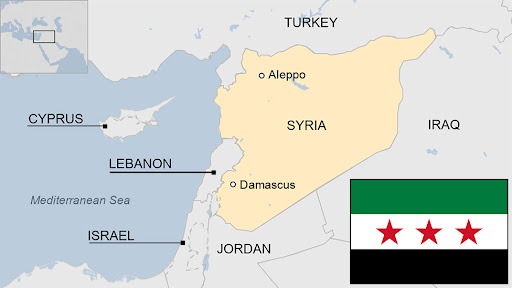
In many hadiths, al-Sham is presented as a key focal point in end-time developments. Some narrations generally refer to the occurrence of turmoil and civil war in this region.
Imam al-Baqir(PBUH) said:
"Among the people of al-Sham, a dispute will arise until their rule collapses…"(1)
The Prophet Muhammad (PBUH) said:
"A sedition will erupt in al-Sham, its beginning like the play of children, then the people will no longer be able to restrain it…"(2)
These narrations indicate that al-Sham, on the eve of the reappearance, will become the scene of political disputes and widespread turmoil; a situation that ultimately paves the way for the emergence of bloodthirsty movements. In the past 15 years, Syria (the core of historical al-Sham) has experienced a rare example of internal conflict, fragmentation of authority, and erosion of central power. At the same time, Lebanon has been grappling with successive political-security crises, while in Palestine/Gaza, periodic conflicts have reached their peak. Altogether, these trends depict an image of disputes in the land of al-Sham and the shaking of governmental structures.
Let us take a closer and more detailed look at the series of events that have taken place in the region of al-Sham in recent years and their relative correspondence with the two narrations mentioned above:
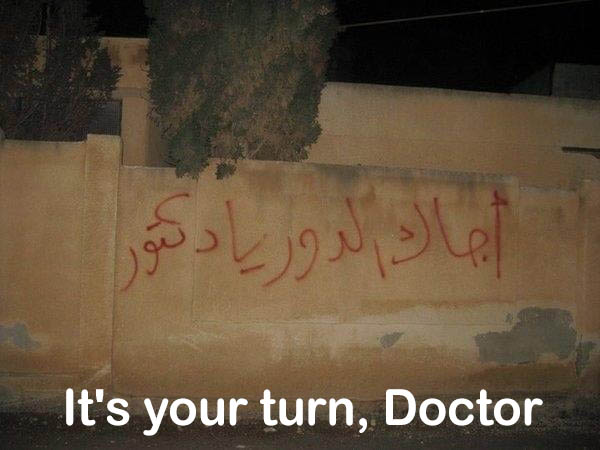
1 - March 2011: The arrest and mistreatment of several teenagers for writing graffiti in Daraa — “Doctor, it’s your turn” — sparked protests. Harsh suppression, sieges, and live fire against demonstrators spread discontent to other cities. Daraa is the capital of Daraa Governorate, located in southern Syria, bordering Jordan.
2 - Spring and Fall 2011: Numerous reports emerged of killings of protesters and mass arrests.
3 - 2012–2014: Syria became fragmented; the army, rebel groups, local protest factions, and then ISIS each controlled portions of the land.
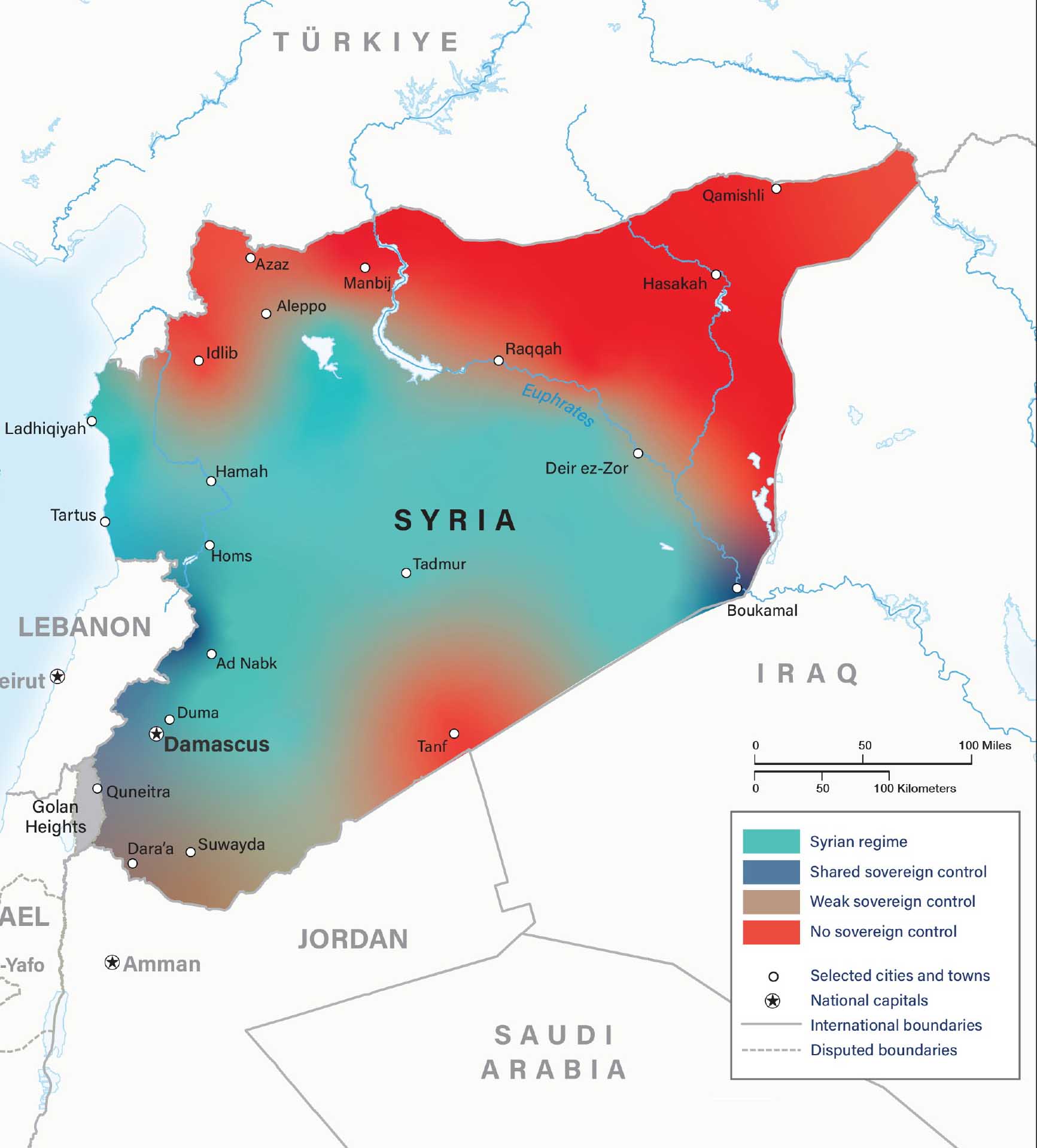
By 2014, ISIS had occupied 30–35% of Syrian territory, including Raqqa Province (its self-declared capital), large parts of Deir ez-Zor, Hasakah, and eastern Aleppo. Non-ISIS rebel groups (the Free Syrian Army, Jabhat al-Nusra, and others) also held about 20–25% of the territory (mainly in the northwest, Idlib, and parts of Aleppo and Daraa). The Syrian government — the army of Bashar al-Assad — by 2014 had its control reduced to about 30–35% of the country (Damascus, the coastal regions of Latakia–Tartus, and parts of Hama and Homs). The remaining areas were in the hands of the Kurds and other local forces.
4 - From 2015, ISIS gradually lost Syrian territory due to the support of the Iranian IRGC and the Russian army, and by 2019, after suffering heavy losses, it was completely expelled from Syria.
5 - According to a report by World Vision, by 2024 more than 16 million Syrians depend on government aid for their basic needs, and about 7 million people are homeless.
The Cycle of Crisis, War, and State Erosion
1 - 2005: The Cedar Revolution and the Withdrawal of Syrian Forces from Lebanon.
The importance of the Cedar Revolution in end-time events: Since the end of the Lebanese Civil War (1990), the Syrian army had been present in Lebanon and effectively held significant influence over the country’s political decisions. Many believed that the Lebanese government would do nothing without Damascus’s green light.
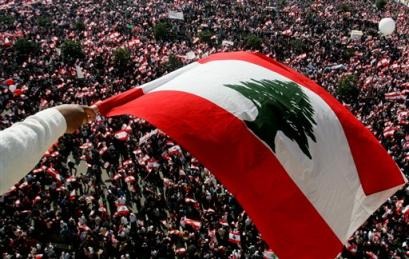
On February 14, 2005, Rafic Hariri (former prime minister of Lebanon and an influential political figure) was assassinated in a massive explosion in Beirut. This incident shocked the country. A large segment of the Lebanese people and parties pointed the finger of blame toward Syria and its allies.
After Hariri’s assassination, large and continuous protests broke out in Beirut. Because these gatherings were held in “Martyrs’ Square” in Beirut and adopted the cedar tree (Lebanon’s national symbol) as their emblem, they came to be called the Cedar Revolution.
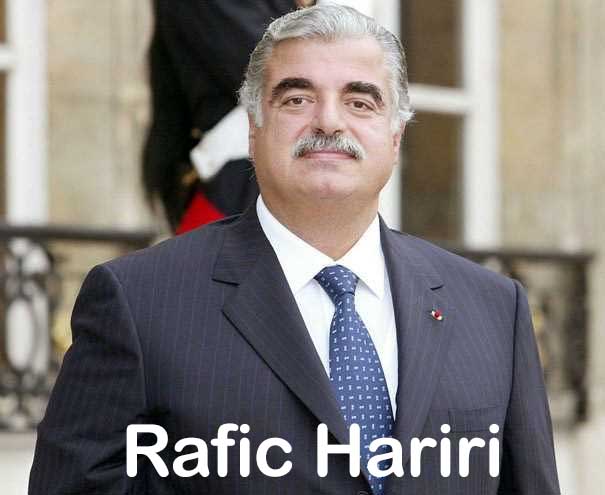
The street pressure of the Lebanese people, together with international support—especially from the U.S. and France, which always viewed the alliance of two Arab countries as a threat to Israel’s existence—led to the withdrawal of the Syrian army from Lebanon in April 2005, after about 29 years.
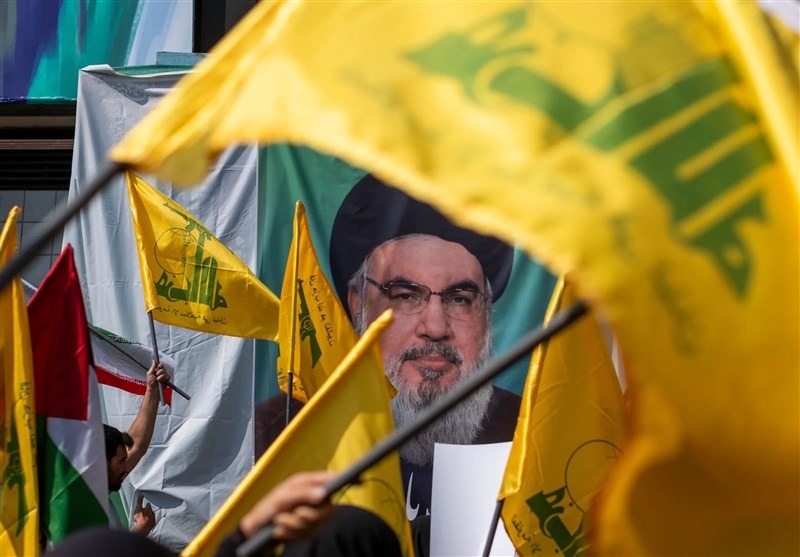
The Cedar Revolution transformed Lebanon’s political equations: from then on, two main blocs emerged in Lebanon: the March 14 Bloc, opposing Syrian influence, and the March 8 Bloc, supportive of Syria and close to Hezbollah. The latter became a nightmare for the Israeli regime. This political divide still overshadows Lebanon’s landscape. Hezbollah, although not spared from assassinations of its leaders by Israel, has over the years inflicted the greatest blows on the body of that regime.
2 - 2006: The 33-Day War with Israel.
For the first time in decades, Israeli cities came under Hezbollah’s missile barrage. More than 4,000 rockets and missiles were fired at northern Israel. About 1 million Israelis in the north were forced to leave their homes or live in shelters. 119 soldiers and 44 civilians were killed, and 4,000 were wounded (according to Israel’s IBA news
agency). Between $3–5 billion in direct losses were inflicted on Israel. In this war, the deterrent power of the Israeli army was severely questioned, since the regime expected to destroy Hezbollah within days, but the opposite happened. Instead of Hezbollah’s destruction, the group emerged stronger and more popular, and Israel suffered a reputational blow regionally.
On the other hand, in Lebanon about 1,200–1,300 people were killed and 4,500 wounded. Over 90% of the dead were civilians; only about 250 were Hezbollah fighters. Around 1 million people (roughly one-quarter of the country) were displaced, fleeing to southern Beirut, the Bekaa Valley, or safer areas. The economic damage to Lebanon was estimated at $3.5–4 billion.
3 - 2019–2021: Popular uprising and the economy sinking into crisis.
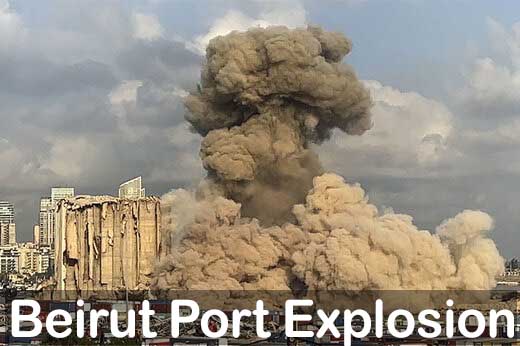
4 - August 4, 2020: The Beirut Port Explosion.
This explosion was a clear sign of the severe weakening of the Lebanese state and the incompetence of its officials. The Lebanese government announced that the blast was due to negligence and administrative corruption in the storage of ammonium nitrate. The material had been brought to Beirut Port in 2013 by the ship Rhosus and, after its seizure, was left unattended for years. Finally, in 2020, more than 2,700 tons of ammonium nitrate, stored without proper safety in Warehouse No. 12 of the port for 7 years, caught fire and then exploded. As a result, 220 people were killed, 7,000 injured, and more than 300,000 were left homeless.
5 - Since October 8, 2023 until now: Ongoing cross-border clashes between Hezbollah and Israel, along with massive displacement of border residents.
and the West Bank: Periods of War and the Great Explosion of 2023
1 - Major wars and clashes in 2008–2009, 2014, and 2021.
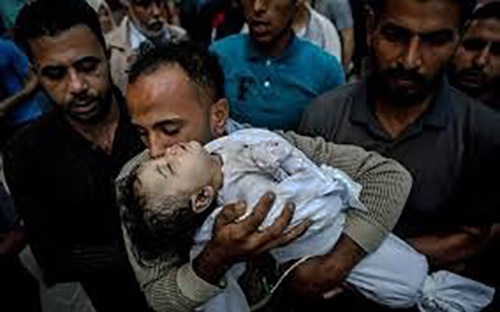
2 - From October 7, 2023 onwards: a full-scale Israel–Hamas war; unprecedented casualties and a deep humanitarian crisis in Gaza, with regional repercussions (including the ignition of the Lebanon front). The number of Palestinian casualties in this war so far has been 62,614, of whom 17,492 were innocent children.
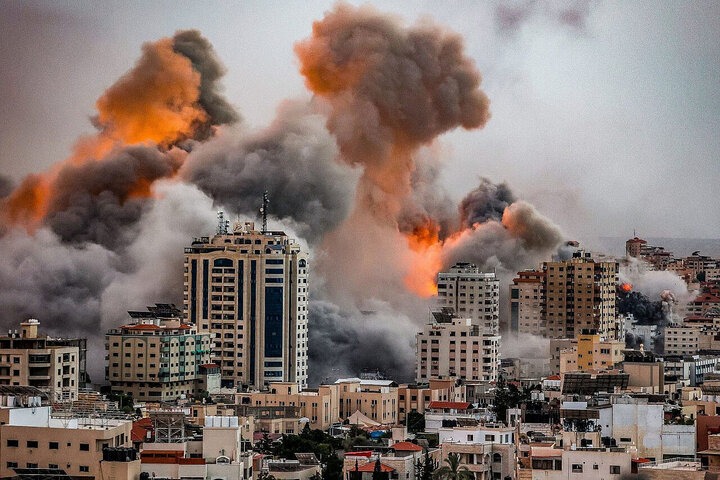
According to United Nations reports, about 70% of the Palestinian dead in Gaza have been women and children. More than 94% of medical centers in Gaza have been damaged or destroyed. Over 1,940 health and relief workers have been killed or wounded.
One of the most significant aspects of the narrations about the signs of the reappearance concerns the figures and movements that will emerge from al-Sham. Among these, Sufyani holds a special position; in both Shia and Sunni sources, his name appears as the most important figure of the sedition in al-Sham before the reappearance.
Numerous narrations indicate that, on the eve of the reappearance of Imam Mahdi (AS), al-Sham will be afflicted by civil wars, bloody conflicts, and widespread seditions. These seditions will not only engulf al-Sham itself, but will also directly affect Iraq and the Hijaz.
According to UNESCO, since the beginning of Syria’s internal conflicts, 60% of the Old City of Aleppo has been heavily damaged and 30% completely destroyed. By 2016, 35,722 damaged buildings had been identified, including 14,027 with moderate destruction, 8,487 severely damaged, and 573 totally destroyed. The estimated cost of reconstruction has been assessed at between 35 and 40 billion USD.(13)Areas such as the eastern suburbs of Damascus and the Yarmouk refugee camp (adjacent to the capital) were severely damaged; reports indicate 70–80% destruction of buildings in these regions.
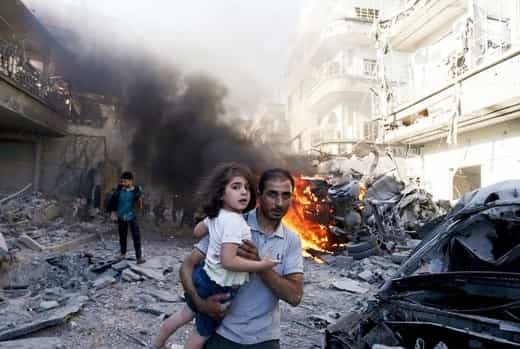
Altogether, across Syria, 140,000 buildings (including 3,000 schools) were either completely destroyed or seriously damaged; the approximate cost of rebuilding the country has been estimated at about 1 trillion USD.
In war-affected cities like Damascus, after years of conflict, the economy and infrastructure have been virtually annihilated: Syria’s GDP value fell from about 60 billion USD in 2010 to less than 9 billion USD, and the poverty rate has risen to over 96% of the population.(14)
. Expansion of insecurity to Iraq and Hijaz:
In some narrations, Imam Muhammad al-Baqir (AS) and Imam al-Sadiq (AS) said that the seditions would first erupt in al-Sham (Syria) and then spread to Iraq.
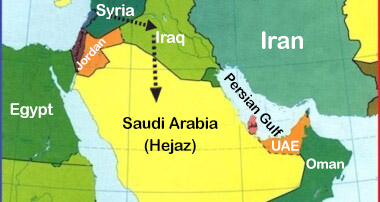
“A sedition will occur in al-Sham and will also spread to Iraq. The people there will be afflicted with corruption and oppression until our Qa’im arises.”(15)
It is also mentioned in sources that after al-Sham and Iraq, the seditions will reach the Hijaz and the lands of the Arabian Peninsula.
“After the sedition of al-Sham and Iraq, a sedition will occur in the Hijaz, and the people there will also be afflicted with oppression and corruption until our Qa’im arises.”(16)
The content of these narrations indicates that the seditions before the reappearance are not limited to one region. Al-Sham, Iraq, and Hijaz are the three main axes of seditions before the reappearance.
. Preparation for the emergence of the inevitable signs of the reappearance (Sufyani, the heavenly call, etc.).
According to narrations, the region of al-Sham, before the reappearance of Imam al-Mahdi (AS), will experience a comprehensive crisis. This crisis will not only be military in nature but will also encompass social, political, and moral dimensions. In this section, we analyze the reasons and consequences of these developments.
Imam Ali (AS) said:
“It is as if I see the banners being raised in al-Sham, then gathering together, then dispersing, and fiercely fighting one another.”(17)
"This narration, along with other reports that foretell multiple wars among various groups and factions in the region of al-Sham, points to a very important fact: the political and social significance of this region."
From the past until today, al-Sham has been recognized as a civilizational crossroads and a sensitive area between Iraq, Hijaz, and the Mediterranean. The presence of key centers such as Damascus and Aleppo makes this land play a decisive role in political transformations.
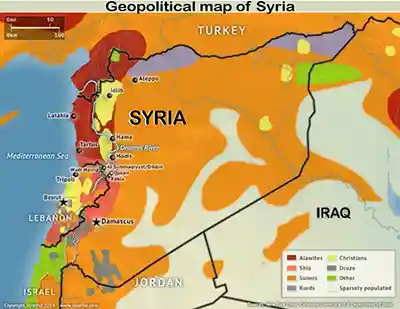
First, let us recall the meaning of geopolitics. The word “geopolitics” combines two terms: Geo = earth, geography + Politics = power, governance. Simply put, geopolitics means: “Where a country is located” and how that affects its power, politics, and importance in the world.
Syria is not an ordinary country in the Middle East; it is a strategic hub, for several reasons:
- Unique geographical location
Syria is right at the heart of the Middle East, bordering Turkey, Iraq, Jordan, Lebanon, and occupied Palestine (Israel), with direct access to the Mediterranean Sea. Any power that seeks dominance over the East or West of the Middle East cannot ignore Syria.
Narrations also point to the social and religious condition of the people of al-Sham before the reappearance of Imam al-Mahdi (AS). This condition demonstrates the direct impact of the population’s behavior on the intensity of the trials and the course of events.
Prostitution and sex work exist in some Muslim countries under official supervision, often by health authorities. Examples include certain cities in Turkey such as Istanbul, Ankara, and Antalya.
In other countries, such centers operate unofficially in nightclubs and hotels catering to tourists, such as in Dubai and Abu Dhabi (UAE), and Casablanca (Morocco).

In Kazakhstan, some official prostitution centers operate under the guise of massage parlors or nightclubs. In Lebanon, areas like Beirut have “super clubs” where sexual activities occur unofficially.
In Syria, it is estimated that around 25,000 people work illegally in prostitution-related activities(24).
In some poor areas of Jordanian cities, prostitution occurs unofficially in private houses, restaurants, or nightclubs.
In 2017, international sources estimated that the number of women engaged in prostitution in Iran was around 228,700, and this number continues to rise.
In Malaysia and Indonesia, in certain areas such as Bali or Jakarta, prostitution centers operate openly, and police intervene only under specific circumstances.
Usury (Riba), one of the major sins in Islam, is prevalent in banking activities across almost all Muslim-majority countries. While the establishment of Islamic banking branches in some countries provides limited interest-free services, the majority of financial transactions are still carried out in the form of usury.
These examples are only a small reference to activities that are sometimes legally permitted. A wide range of unethical and illegal activities—such as gambling, drug consumption and trafficking, theft, robbery, murder, adultery, sodomy, organ trafficking, and many other immoral practices—exist in Muslim-majority countries. The alarming statistics of these activities reflect a severe moral decline across these societies.

The developments in al-Sham (Syria) before the reappearance of Imam al-Mahdi (AS) are extensively mentioned in Shia and Sunni narrations. An analysis of these narrations shows that al-Sham is not merely a geographical region, but a center of political, social, and military transformations in the end times.
Al-Sham is the epicenter of trials and internal conflicts before the emergence of the Imam, and these developments pave the way for the appearance of figures such as Sufyani. The emergence of Sufyani from Damascus is considered a definite sign of the reappearance. In addition to Sufyani, multiple movements and banners such as Ashab and Abqa’ rise in al-Sham, resulting in intense power struggles.
The region witnesses bloody wars, urban destruction, and widespread insecurity. These trials extend to Iraq and the Hijaz, and set the stage for the manifestation of other signs.
The strategic position of al-Sham, its proximity to Iraq and the Hijaz, along with the moral and religious decline of its people, intensifies the chaos. The wars and insecurity are not confined to Syria alone, but their impact on neighboring areas is significant.
The people of al-Sham are divided into three main groups: followers of truth, followers of falsehood, and the hesitant or silent. Their faith, morality, and social stance have a direct effect on the severity of the trials and the course of the reappearance.
Narrations emphasize that in times of turmoil and corruption, the only path to salvation is adherence to the truth and the guardianship of the Ahl al-Bayt (AS). Weak faith and silence in the face of injustice create the conditions for the spread of oppression and corruption.
References
1 - Al-Ghaybah, Nu’mani, p. 253
2 - Sunni sources: Al-Mu’jam al-Kabir, Tabarani, Vol. 20, p. 108
3 - Al-Ghaybah, Nu’mani, p. 264
4 - Bihar al-Anwar, Vol. 52, p. 252
5 - Sunni sources: Al-Fitan, Ibn Hammad, p. 79
6 - Al-Ghaybah, Nu’mani, p. 279
7 - Al-Ghaybah, Nu’mani, p. 345
8 - Ahkam Farzand Dimashq, p. 270
9 - Al-Ghaybah, Nu’mani, p. 279
10 - Sunni sources: Al-Fitan, Ibn Hammad, p. 218
11 - Kamal al-Din, Sheikh Saduq, Vol. 2, p. 650
12 - Sunni sources: Sunan Abu Dawood, Kitab al-Fitan, Hadith 4242
13 - UNESCO reports:https://tinyurl.com/3fwz2k56, https://tinyurl.com/8rjm4249, https://tinyurl.com/w8tn75jj
14 - https://tinyurl.com/2x6tu224
15- Al-Kafi, Vol. 8, p. 523
16- Bihar al-Anwar, Vol. 51, p. 295
17- Nahj al-Balagha, Khutbah 60
18- Al-Ghaybah, Nu’mani, p. 282
19- Sunni sources: Sunan Abu Dawood, Vol. 4, p. 106; Musnad Ahmad, Vol. 2, p. 327
20- Bihar al-Anwar, Vol. 52, p. 243
21- Sunni sources: Sahih Muslim, Kitab al-Fitan, Hadith 2882
22- Al-Ghaybah, Nu’mani, p. 285
23- Al-Malahim wa al-Fitan, Ibn Tawus, p. 123
24- https://tinyurl.com/yndwspfx
