+ Add to your favorite list

Signs of the Approaching Reappearance – The Rise of a Heretic from Qazvin
×
![]()
Among the predictions and signs related to the end times and the period close to the reappearance, there are narrations that speak about the turmoil and unrest of the last days. While the most significant of these disturbances are associated with Sufyani and his allies, especially the tribe of Banu Kalb, there are also references to the rise of other rebellious figures such as Shu’ayb ibn Salih, Ashhab, Abqa’, and others.
One of these misguided uprisings, which is believed to take place not long before the reappearance, concerns a heretical figure (a disbeliever, atheist) rising from the city of Qazvin. Although a few narrations mention incidents related to Qazvin, the clearest report comes from Muhammad ibn al-Hanafiyyah, as recorded in Kitab al-Ghaybah by Shaykh al-Tusi. It is worth mentioning that Muhammad ibn al-Hanafiyyah was the half-brother of Imam Husayn (peace be upon him) and the son of Imam Ali (peace be upon him), and this narration is attributed to Imam Ali himself.
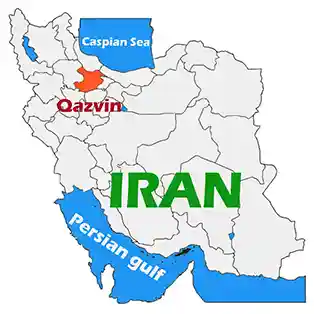
The narration cited in al-Ghaybah of al-Tusi and later in Bihar al-Anwar regarding the uprising of a heretic from Qazvin states:
“Al-Fadl narrated from Ibn Abi Najran, from Muhammad ibn Sinan, from Abu al-Jarud, from Muhammad ibn Bishr, from Muhammad ibn al-Hanafiyyah, who said:
I asked the Imam (Ali, peace be upon him), ‘Your rule and government seem to be long delayed. When will it finally come?’ The Imam shook his blessed head and said: ‘The world has not yet gone through its upheavals; brothers have not yet betrayed one another; where is that uprising while rulers have not yet oppressed their subjects? Where is that rule when the heretic of Qazvin has not yet risen, the one who will tear apart the veils of chastity, fill the hearts with disbelief, alter the walls of the city, and strip it of its beauty and joy? Whoever flees will still be harmed by him; whoever fights him will be killed; whoever avoids him will be impoverished; and whoever follows him will become a disbeliever. Until two groups rise up, both weeping: some weeping for their religion, and others for their worldly interests.’”
As can be seen, this narration clearly speaks of the emergence of a heretical figure from Qazvin — a man with no real belief in religion. Whoever supports him is also deemed a disbeliever. Beyond faith, his character is described as violent, engaging in murder and bloodshed.
But the question arises: Has Qazvin truly witnessed such a figure in its history?
Although answering this question may seem somewhat difficult, turning the pages of history—especially the events of the past century—can help guide us toward an answer.
On February 21, 1921 (3 Esfand 1299 in the Solar Hijri calendar), a harsh and ruthless military officer named Reza Khan Mirpanj(1), who commanded the Cossack Brigade stationed in Qazvin, launched a coup against the government of Ahmad Shah Qajar with the support and planning of British military advisors. This coup, which historical records show was entirely orchestrated by the deceitful British government, was carried out under the pretext of supporting Sayyed Zia al-Din Tabataba’i (a well-known agent loyal to the British) as prime minister, with Reza Khan himself leading the forces.
This event brought about a new era of tyranny, repression, and suffocation for the Iranian people,an event that has since been remembered as the “Black Coup.”
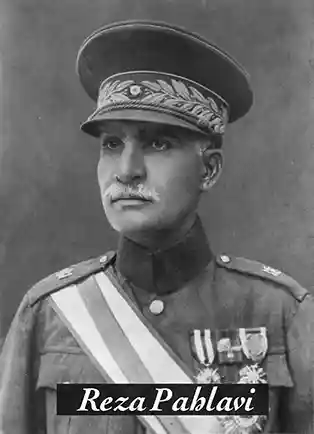
The British colonialists, having realized that the young Constitutional government, despite its flaws and weaknesses, stood as an obstacle to their full-scale interference in Iran’s affairs, decided to dismantle the fragile Qajar monarchy. They sought to replace it with a strong yet oppressive regime that could once again secure their domination over Iran.
Although the coup did not immediately topple the Qajar dynasty, it severely weakened it. Within only a few years, the throne of Iran fell into the hands of none other than the leader of the Qazvin Cossack coup — Reza Khan.
The course of Iran’s history at that time unfolded in this way: after the Black Coup, Ahmad Shah Qajar(2) and the constitutional government were forced to appoint Sayyed Zia al-Din Tabataba’i as prime minister, placing this British pawn at the head of the country’s executive affairs.
However, the British government — the very architect of the coup — soon realized that no one could serve their interests in Iran better than Reza Khan Mirpanj, the leader of the Qazvin Cossacks.Reza Khan, was illiterate and rough. He lacked independent thought and therefore could not govern on his own initiative, making him entirely dependent on British guidance.
Although Britain had initially chosen Tabataba’i as prime minister, they soon realized that Reza Khan, though illiterate and rough, lacked any independent thinking, making him fully dependent on British guidance. Therefore, he was far better suited to carry out Britain’s plans in Iran.
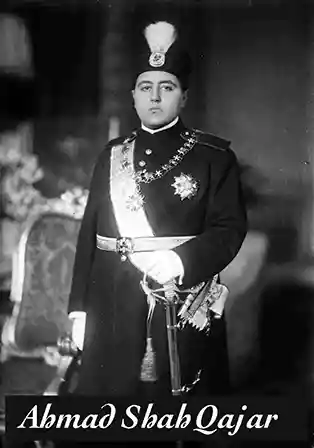
It was not long before Reza Khan, now titled Sardar Sepah (Commander of the Army), replaced Tabataba’i as prime minister and gradually consolidated power. With Reza Khan at the helm, Iran — which had experienced a relative taste of freedom since the abdication of Mohammad Ali Shah Qajar — once again fell under oppression and tyranny.
The British, satisfied with the success of their scheme, decided to take the next step by placing Reza Khan directly in control of the country.
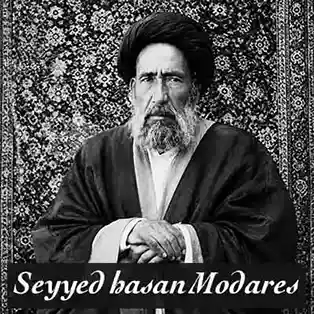
Initially, he attempted to abolish the weak Qajar monarchy under the pretense of forming a republic, but the foresight of prominent figures like Martyr Ayatollah Modarres, representative of Tehran in the National Assembly, prevented this plan from being fully realized.
Yet the oppressive regime established by Prime Minister Reza Khan quickly crushed Modarres and his supporters through imprisonment, exile, and assassination, clearing the path for a new monarchy. Consequently, with the help of British-backed deputies in the parliament, Reza Khan officially ended the Qajar dynasty
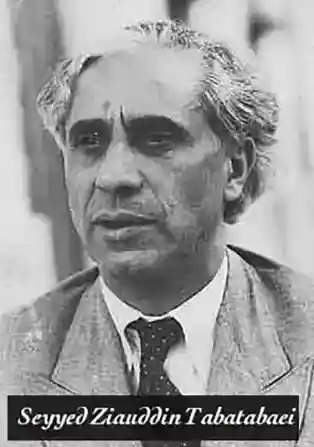
and founded the Pahlavi monarchy in 1925 (1304 Solar Hijri).
With the beginning of Reza Khan’s reign, Iran entered one of its darkest periods in modern history. Although the Iranian people had long suffered under injustice and oppression from rulers, the tyranny of Reza Shah was unparalleled. He trampled even the boundaries that no previous monarch dared to cross.
During his reign, Reza Shah not only oppressed the people but also acted against Islam and Iranian culture. Measures such as the forced unveiling of Muslim women, suspension of mourning rituals for Imam Hussain (peace be upon him), manipulation of prayer times, and the violent massacre of worshippers at Goharshad
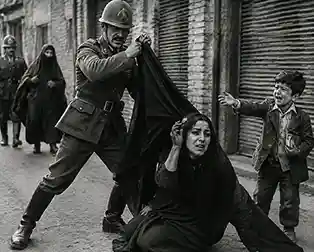
Unveiling:
After coming to power, Reza Shah pursued a strong modernization and Westernization policy.
He wanted to make Iranian society appear more like European countries, following the example of Ataturk’s Turkey. One of the most important traditional symbols in Iranian society was women’s hijab, which Reza Shah considered a sign of
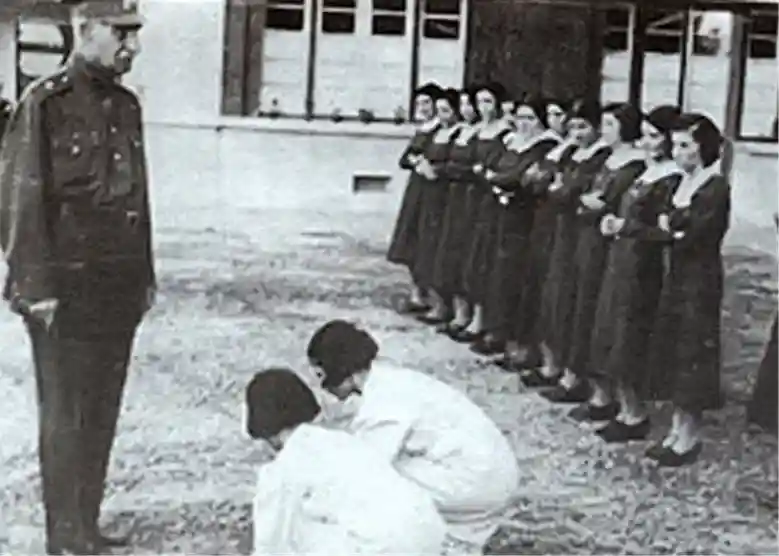
backwardness. In January 1936 (Dey 1314), Reza Shah issued a decree mandating the unveiling of women. According to this decree, women were not allowed to wear the chador, face veil, or headscarf in public places.
Government officials monitored streets, markets, and public spaces, and if a woman was seen wearing a hijab, it could be forcibly removed.
Consequences:
The wealthy and court classes accepted it more quickly, and their women appeared unveiled at official events and parties. However, among middle-class and religious communities, the reaction was strongly negative. Many women chose to stay home for years rather than appear in public without a hijab.
Public protests occurred in some cities. The most famous was the Goharshad Mosque incident in Mashhad (1935/1314), where hundreds were killed in protest against Reza Shah’s policies, including the unveiling decree.
Mosque were aimed at weakening religion in the country.
Reza Shah also sought to impose Western culture, promoting European-style clothing, hats, ties, and bowties. His admiration for Atatürk, the founder of secular Turkey, as a model for governance, reflected his desire to modernize Iran according to a Western, anti-religious model.
The tyranny and oppression during Reza Shah’s era were so severe that any opposition was met with death, leaving no space for meaningful rebellion. Unfortunately, some still regard his limited infrastructural projects as acts of benevolence, while the majority of these, such as the North-South railway and the Kandovan road, primarily served British interests. For example, the North-South railway facilitated the movement of British military equipment from southern ports to northern regions.
Reza Shah’s reign lasted sixteen years. During World War II, due to his support for Germany, Britain and the Soviet Union removed him from power in 1941 (1320 Solar Hijri) and transferred the monarchy to his son, Mohammad Reza Pahlavi, who continued his father’s policies, keeping Iran in hardship.
Considering Reza Khan’s rise to power, personality, and reign, we find a striking correspondence with the accounts of the Zindiq (heretic) from Qazvin mentioned in the traditions. Historically, Reza Khan built the foundations of his rule through the Black Coup, a military uprising that began with the Cossack forces stationed in Qazvin under his command. In fact, this event perfectly aligns with the Arabic term “khuruj” or uprising, as it refers to an aggressive offensive movement. In other words, Reza Khan’s aggressive march from Qazvin laid the groundwork for his future government. Otherwise, a simple Cossack who even struggled to feed himself could never have attained such a position.
Although Reza Khan was born in Alasht, in the Savadkuh region of Mazandaran, his “khuruj” or coup took shape in Qazvin, where he served in the Cossack regiment. The tradition specifically speaks of the uprising of the Zindiq from Qazvin, not his place of birth, which fully corresponds to Reza Khan’s actions.
The tradition also describes the Zindiq as violent and murderous toward opponents, which closely matches Reza Khan during his coup, prime ministership, and reign. Additionally, it mentions that anyone who supported the Zindiq would become a disbeliever, paralleling Reza Khan’s measures such as the unveiling of moslems women and prohibition of mourning ceremonies, which caused followers to stray from Islam willingly.
Another point linking the Zindiq from Qazvin to Reza Khan is found at the end of the tradition, which states that two groups rose against him:
1- Those who weep for their religion
2- Those who weep for their worldly interests
Historically, during the late Reza Shah period and early Mohammad Reza Shah period, two major groups opposed the ruling regime:
1 - The majority of Iranian people, devout Muslims adhering to the teachings of the Ahl al-Bayt, opposed Reza Khan’s and his son’s policies as contrary to Islamic teachings — corresponding to the group “weeping for their religion.”
2 - Another group, which emerged in Iran after the Bolshevik Revolution of 1917 in Russia and ideologically adhered to communism and Marxism, calling themselves the
Tudeh, became active in opposition to the Pahlavi regime during the late reign of Reza Khan and the early reign of Mohammad Reza Pahlavi. These movements, instigated by the Soviet communist government (which had felt its interests threatened since Reza Khan’s British-backed coup), were neither comparable in numbers nor in significance to the spontaneous actions of the religious groups. Most likely, the phrase in the narration referring to “those who weep for their worldly interests” corresponds to these communists and the Tudeh Party, as they had no belief in the Hereafter and devoted all their efforts to altering their worldly circumstances.
Thus, as you can see, the narration’s reference to the two groups rising against the government established by the Zindiq of Qazvin largely corresponds to the religious groups and the Tudeh (communist) faction.
A Very Important Note: The narration mentions changes in the city of Qazvin:
"…that he would tear apart the veils of modesty, fill their hearts with disbelief, change the (city’s) walls, and destroy its vitality and beauty…"
A question that might arise in the minds of readers is: the narration talks about changes in Qazvin—does this relate to Reza Khan? Or does the “Zindiq of Qazvin” refer to someone whose rebellion and unrest were confined solely to this city?
The answer is that the “Zindiq of Qazvin” does not refer to someone whose actions were limited to Qazvin. As the narration states:
“No Zindiq has yet risen from Qazvin.”
Here, the phrase "from Qazvin" is used, rather than " in Qazvin". This indicates that the Zindiq’s actions were not confined to the city itself, but had significant effects on other regions as well. Had the phrase " in Qazvin" been used, it would have been clear that all of his activities were limited to Qazvin. However, since the narration states that “his uprising began from Qazvin (min Qazvin),” it can be understood that Qazvin was merely the starting point of the rebellion, which then extended to other areas.
Similarly, Reza Khan’s uprising began in Qazvin and subsequently spread to Tehran and eventually across Iran. Therefore, like the Zindiq of Qazvin, Reza Khan’s rebellion was not limited to a single city; it started there and extended to other regions. Moreover, the Reza Khan uprising had a significant impact on Qazvin itself, as the city, like other cities in the country, came under the influence of the new government, prime ministership, monarchy, and regime established by him. Consequently, Qazvin, along with Tehran and other regions, underwent substantial changes. In line with the narration, cities were reshaped by Reza Khan’s policies, including the settlement of nomadic tribes:
"…change the (city’s) walls,"
and the social and cultural boundaries of the cities were altered:
"…tear apart the veils of modesty, fill their hearts with disbelief,"
while, due to the oppression and suppression under Reza Shah’s government, distrust spread everywhere and the joy and vitality of the people, especially urban residents, diminished:
"…destroy its vitality and beauty."
Thus, as you can see, the narration about the situation in Qazvin after the uprising of the Zindiq of Qazvin aligns with the historical realities of Iran during Reza Shah’s era. After Reza Khan’s coup and his rise to power, the whole of Iran, particularly its major cities (including Qazvin, Tehran, Mashhad, etc.), underwent significant transformations.
Another Very Important Point: In addition to the reasons already mentioned, another factor linking the Zindiq of Qazvin to Reza Khan is that, throughout history—from the emergence of Islam to the present—no other rebel has arisen from Qazvin who openly opposed the true religion of Islam in the way Reza Khan did. From this point onward, especially after the establishment of the Islamic Republic of Iran (which, according to the narrations, is likely the government that will pave the way for the appearance of Imam Mahdi [may Allah hasten his reappearance]), it is unlikely that any rebel from Qazvin could mount such a widespread rebellion and seriously oppose Islam.
Given that Reza Khan was the only figure in history who rose from Qazvin and confronted Islam, it seems reasonable to conclude that the “Zindiq of Qazvin” mentioned in the narration refers to him. Notably, several scholars, including Hojjat al-Islam Haj Seyed Reza Rafai and Mr. Ali Falsafi, have also identified Reza Shah as the Zindiq of Qazvin.
The coup and wrongful uprising of Reza Shah, which occurred approximately 90 years ago, serve as further evidence of the imminent appearance of Imam Mahdi (may Allah hasten his reappearance), as the narration cited at the beginning of the article discusses events of the End Times. The fulfillment of this prophecy indicates that the era we are living in is close to the time of his appearance.
Although we do not know the exact timing of his appearance, given the occurrence of numerous signs in the past century, it seems that our era is a special period and increasingly close to his reappearance.
However, hastening the arrival of Imam Mahdi also depends on the efforts of the Muslims themselves; thus, it is important for us, as Muslims, to work hand in hand to prepare the way for his prompt reappearance.
Finally, it should be noted that the interpretation presented here is merely our personal opinion and analysis, which we have endeavored to base on both narrations and historical facts. Humans are not free from error, and we are no exception. Therefore, some of these correspondences and analyses may not be entirely accurate, which would be a shortcoming on our part, not of the narrations themselves. Nevertheless, we have strived to minimize errors by using reliable sources and references for our analys

