
The Twelfth Imam
The Twelfth Imam
Font size setting
+ Add to your favorite list

Article ID: 21
Article Date: 2025-08-16
Writer: Parsa Panahi
Regarding the catastrophic state of the time before the appearance of the Qa’im from the Family of Muhammad (peace be upon him), there are numerous reports and hadiths transmitted from the Immaculate(1) . These concern widespread and pervasive corruptions in all spheres—social, political, ethical, cultural, and so on—along with the corruptions, oppressions, and domestic rebellions that are devastating in both Muslim and non-Muslim societies.
Among these reports and narratives, many have already occurred. This is not a mere claim, not a mere possibility; rather, thanks to the extensive technologies of the modern information era, the shocking scenes of criminal acts by criminals, oppression by oppressors, and the corruption of individuals and corrupt societies and tyrannical rulers have been projected onto the screens of televisions, laptops, mobile phones, and computers of people around the world, and circulated through various types of social networks and platforms. Perhaps the authenticity of such narratives used to be doubtful or considered exaggerated. But with the events observed in the last few decades, especially in the last few years, we realize that these narratives were not as inflated as they seemed.
In any case, this article seeks to make a comparative between what has come to us in the form of narratives and prophecies written by the Imams and the events of the contemporary era. It should be noted that the approach of this article is limited to social corruptions and nothing more. I hope to be able, in a timely manner, to address the broad corruptions in the political and ethical spheres of end-time societies. The number of hadiths that warn of broad social corruptions in the end times is large. In this article we, as a sample, will limit ourselves to four narrations only:
There will come upon my nation a calamity worse than any that has ever been heard, and the Earth, in all its vastness, will constrict for them.(2) .
In the text, this hadith explicitly mentions the Ummah of the Prophet Muhammad , i.e., Muslims.
Therefore, aside from the displacement of non-Muslims in past years who were forced to flee or migrate from their homes for various reasons, we should look for similar events that befell Muslims.
Perhaps the most evident example of this issue is the forced abandonment of homeland by Afghans. The waves of forced Afghan migrations occurred not just once but in several waves for different reasons.
The first wave of Afghan migration began in 1979 with the Soviet invasion of Afghanistan. The Russians, since the time of the Tsars, coveted Afghanistan. The question of the occupation is not our concern here. But during the 1979 occupation, hundreds of thousands of Afghans fled from their homeland to other countries. The majority of these forced migrants went to neighboring countries—mainly Iran and Pakistan. According to official statistics published on the UNHCR website, in that
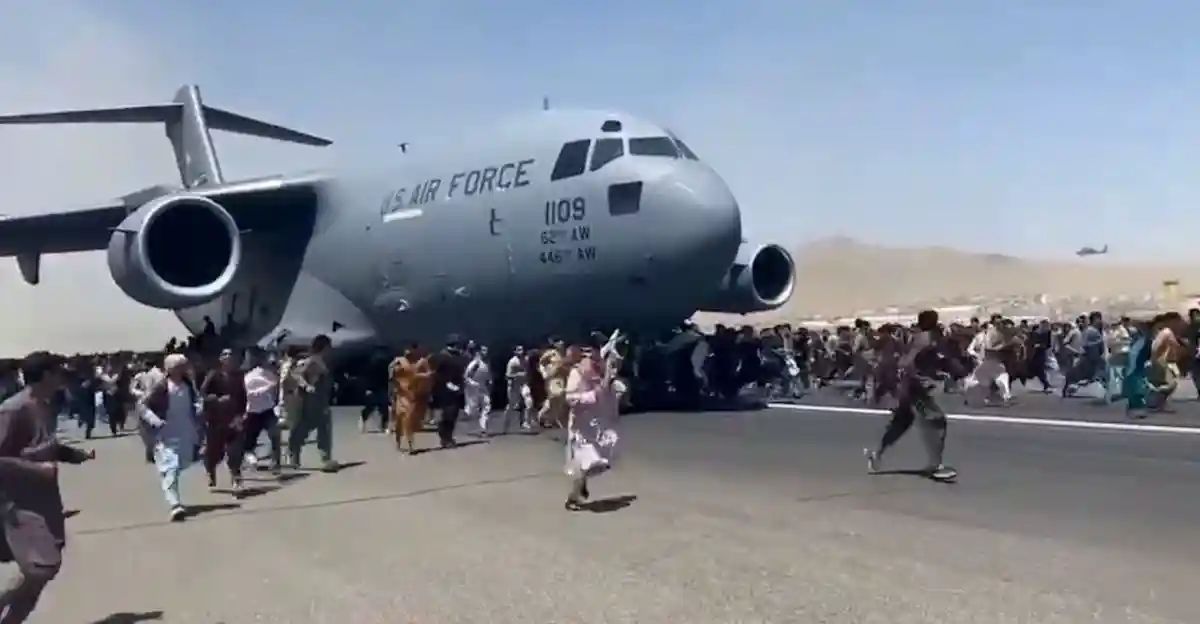
year 400,000 Afghans sought refuge in Pakistan and 200,000 in Iran. As the fighting intensified in 1980, the number of Afghan migrants rose rapidly. By the end of 1981, this number had reached 1.9 million people, making it the world’s largest refugee population at that time.
The Afghan civil wars and the brutal violence of the parties involved sent waves of subsequent migrations. By 1992, more than 6 million Afghans had fled to other countries. After the fall of the Taliban in 2001, many refugees returned to Afghanistan. Yet in the 2010s, due to insecurity and the resurgence of the Taliban, a new wave of migration began. It is estimated that more than 2 million Afghans fled to various countries during this period.
The refugee statistics for Afghan refugees worldwide are catastrophic. Currently, the following countries host the largest numbers of Afghan refugees:
1. Iran: It is estimated that between 5 and 8 million Afghans live in Iran, including both Legal and illegal refugees.
2. Pakistan: About 1.5 million people.
3. Turkey: 3 million people.
4. Germany: About 348,000 people.
The mentioned countries, especially Iran and Pakistan, which have hosted the largest number of Afghan refugees and share borders with Afghanistan, have repeatedly taken actions to expel illegal refugees. For example, in 2025, after a 12-day war between Iran and the Israeli regime, due to the betrayal of a number of Afghans to the host country, Iran, and the involvement of some of them in assassinations carried out on Iranian soil by Israel, up to the time of writing this article more than 1,200,000 illegal refugees have been repatriated to their home country.
Mentioning the above statistics and recalling the forced migration of Afghans and expulsions from host countries, and their being moved between their homeland rulers and leaders of other countries, serves as a reminder of a narration attributed to the Prophet Muhammad about the fate of his Ummah: "... and the earth, with all its vastness, will be narrow for them."
The widespread migration of Syrians began in 2011, concurrent with the start of the civil war in Syria. This war led to the destruction of infrastructure, an increase in violence, and human rights abuses that forced many citizens to leave their country. The presence of terrorist groups such as ISIS, which has accounted for some of the highest levels of violence in recent decades, was among the main drivers of forced migration of Syrians. From 2011 to 2025, more than 14 million Syrians have been forced to leave their homes. Of these, more than 7.4 million are internally displaced within Syria and more than 6.5 million have sought refuge in other countries.
The largest refugee numbers according to UNHCR data are:
1. Turkey: with more than 3.6 million Syrian refugees, the world’s largest host country for refugees.
2. Lebanon: with about 1.5 million refugees, the highest refugee-to-population ratio.
3. Jordan: hosting more than 630,000 Syrian refugees.
4. Iraq: with about 250,000 Syrian refugees.
5. Egypt and North African countries: a smaller number of Syrian refugees reside in these countries.
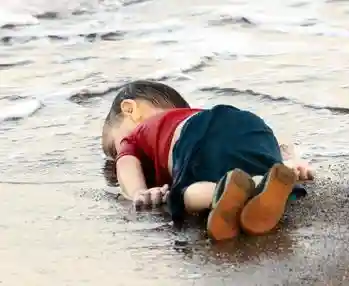
Syrian attempts to migrate to Europe largely occurred via the world’s most dangerous migration route, the Mediterranean Sea. Along this route, numerous drowning incidents have saddened the hearts of many people around the world. For example, in September 2015, the shocking image of Alan Kurdi, the 2-year-old Syrian boy who drowned off the coast of Turkey, drew global attention and became a symbol of the refugee crisis. According to UNICEF reports, from 2018 to 2023, more than 1,500 children have died or gone missing while attempting to cross the Mediterranean route.Innocent and oppressed children who, bewildered and lost, instead of playing at home and in daycare centers, died among the raging waves of the Mediterranean or in the bellies of hungry sharks.
Widespread Iraqi migration since 2003, concurrent with the US-led invasion of Iraq and the fall of Saddam Hussein, began. These developments led to instability, sectarian and terrorist violence, and the rise of extremist groups such as ISIS, which forced many Iraqis to leave the country.
Sectarian and terrorist violence, especially during the ISIS period (2014–2017), air and ground assaults in various parts of the country, harassment of minorities—particularly Christians, Yazidis, and Shia—and economic poverty, lack of job opportunities, and shortages of healthcare and educational services led to a wave of forced migration of Iraqis to other countries, the most important of which are:
1. Jordan: hosting more than 600,000 people.
2. Turkey: around 37,000 people.
3. Germany: more than 130,000 people.
4. Sweden: around 34,000 people.
5. Iran: more than 28,000 people.
These figures are based on UNHCR data and other reputable international sources.
According to various reports, from 2014 to 2020, more than 19,000 people lost their lives while attempting to cross the Mediterranean Sea. Although this figure includes migrants from various countries, Iraqis are among those counted.
Moreover, about 1.2 million Iraqis are internally displaced within the country.
The initial wave of Palestinian migration in 1948, concurrent with the occupation of their homeland and the establishment of the State of Israel and the subsequent wars, began. During this period, more than 750,000 Palestinians were displaced from their homes. The main causes of this migration included direct expulsion by Israeli forces, village demolitions, psychological warfare, assassination, and several massacres such as the Deir Yassin massacre.
Palestinians have migrated to various countries, with the most significant host countries being:
1. Jordan: hosting more than 2.3 million Palestinian refugees.
2. Lebanon: about 485,000 people.
3. Syria: about 576,000 people.
4. Egypt: more than 100,000 people.
5. European countries: countries such as Sweden, Germany, and Belgium host Palestinian refugees.
According to official 2023 statistics, about 5.9 million Palestinians were living outside the occupied territories. Of this number, about 2.5 million live in the West Bank and Gaza, which account for more than 42% of all Palestinian refugees.
The early waves of Rohingya migration date back to the 1970s and 1990s, when violence and purges in Rakhine State forced some of them to flee to Bangladesh.
Rohingya are an ethnic minority, predominantly Muslim, in Rakhine State (western Myanmar). Almost all are Sunni and largely follow the Shafi‘i school.
They differ linguistically, culturally, and religiously from the Buddhist majority in Myanmar. These differences, especially their Islam, have been among the main causes of discrimination and severe oppression against them. The Myanmar government has not recognized their official citizenship since 1982 and calls them “Bangladeshi foreigners,” although they have lived in the region for centuries.
About 200,000 people in 1978 and about 300,000 by the early 1990s were forcibly displaced to other countries. The peak of the crisis occurred in 2017 when the Myanmar army carried out a cleansing operation in Rakhine and forced more than 650,000 to 700,000 Rohingya to flee to Bangladesh.
Ethnic cleansing and targeted violence by the Myanmar army—massacres, rapes, and burning of villages—along with the lack of official citizenship since 1982, which hindered access to basic services, were among the main reasons for migrations. Many innocent Rohingya were burned alive simply because they are Muslims.
Overall, by mid-2024, about 1 million Rohingya were residing in Bentapakoo camps in Bangladesh.
Additionally, by the end of 2023, more than 2.6 million people inside Myanmar were displaced.
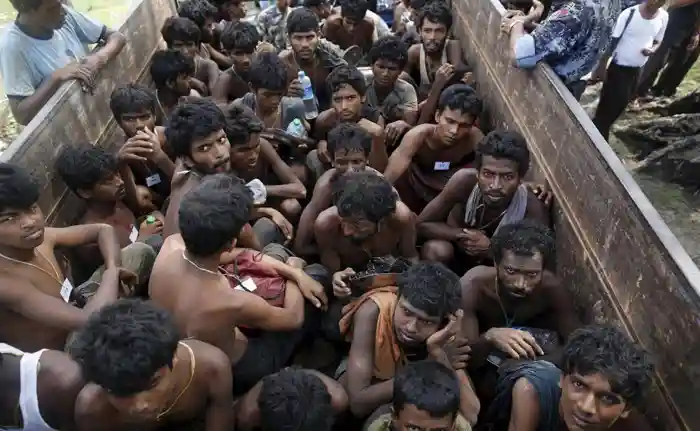
In 2023, nearly 4,500 Rohingya crossed by dangerous boats from the Bay of Bengal and the Andaman Sea, of whom 569 drowned or went missing along these routes.
In 2025, two separate tragedies occurred in May: a total of 514 people were aboard two boats; 427 died and only a few survived.
In 2022, it was estimated that about 350 Rohingya died at sea. There were also reports of a boat with about 90 passengers that sank off the shores of Myanmar, with some dying or missing.
Also, in 2020, at least 32 people were rescued when a boat, adrift at sea for months, was found, but many of them were dead along the way.
The largest wave of migration in Bosnia and Herzegovina occurred during the Bosnian War (1992–1995); more than 1.2 million people fled the country, of whom about 1.0 million were Bosniak Muslims. At the same time, nearly 1 million became internally displaced (IDPs).
These migrations were primarily due to ethnic cleansing against Bosniak Muslims by Serb and Croat forces, along with war, genocide, and political instability.
Approximately half of the refugees sought asylum in neighboring countries such as Serbia, Croatia, and Montenegro; the other half largely went to Western Europe. About 350,000 fled to Germany, and the remainder went to countries such as Sweden, Austria, the Netherlands, Denmark, and so on, with some settling in Norway and Finland.
Displacement of Muslims is not limited to the few countries mentioned. These countries are cited only as examples given the substantial number of migrants. The aim of mentioning events that led to the forced migrations of millions of Muslims worldwide is in line with the topic of this article, namely the comparison of the hadiths of the Prophet Muhammad (peace be upon him) with end-times events.
“A calamity will befall this ummah to the extent that a man will find no refuge from the oppression toward which he turns. Then God will raise up a man from my household, and He will fill the earth with justice just as it has been filled with oppression...(3).”
The gist of this narration is also mentioned, with slight variations, in the sayings of Imam Baqir and Imam Sadiq .
Careful consideration of the bloody events and devastating calamities that in recent decades, or even centuries, have befallen the innocent and defenseless people shows that this narration can indeed apply to many of them. The number of massacres carried out by the most bloodthirsty warmongers in the world, whether during the two world wars or before or after them across various countries, and the number of men, women, children, and the elderly slaughtered in the cruellest ways in these wars, is so large that sometimes their figures seem legendary.
Genghis Khan the Mongol, after establishing his empire in 1206 CE, over 20 years invaded more than 26 countries. The number of people slaughtered by his troops with the utmost brutality in these campaigns is said to be between 40 and 60 million.
Between 1915 and 1917, about 1.5 million Armenians were killed by the Ottoman Empire.
During World War I (1914–1918) 15 to 20 million people died, and during World War II (1939–1945) 70 to 130 million people died either directly in wars or indirectly due to famines and diseases caused by the wars.
In addition, Adolf Hitler between 1933 and 1945 burned six million Jews alive in crematoria.

Stalin, between 1930 and 1953, killed a large number of people, the count given ranging from 10 to 60 million, by various means including political executions, famines, forced labor in labor camps (Gulags), and other suppressions. A significant number of these victims were children and young people who were smothered in gas chambers alongside their parents.
Based on official United Nations statistics, the Iran–Iraq War Research Center, and credible historical sources(4)

Saddam Hussein’s invasion of Iran in 1980 and the eight-year war that followed left more than one million people dead on both sides.
- In addition, between 1970 and 2003, between 250,000 and 500,000 Kurds and Iraqi Shia were killed by direct orders of Saddam Hussein.
- Iraq’s invasion of Kuwait in 1990 also left about 88,000 people dead, among military and civilian on both sides, in addition to the coalition forces of the United States and the United Kingdom.
- In 1994, in just one hundred days, about 800,000 people in Rwanda were massacred by extremists.
- The Cambodian genocide by the Khmer Rouge regime led by Pol Pot between 1975 and 1979 killed between 1.5 million and 3 million Cambodians.
These staggering statistics are only a sample of the numerous killings that occurred under various pretexts by the most oppressive dictators or political groups in recent centuries. These figures, aside from the numerous abuses against women and girls and even children during these wars.
However, one could say with some authority that one of the worst and most brutal genocides is the massacre imposed by the Israeli regime on the Palestinian people. In truth, what most closely aligns with the narrations of the Imams is the merciless massacre and genocide that Israel unleashed in Gaza.
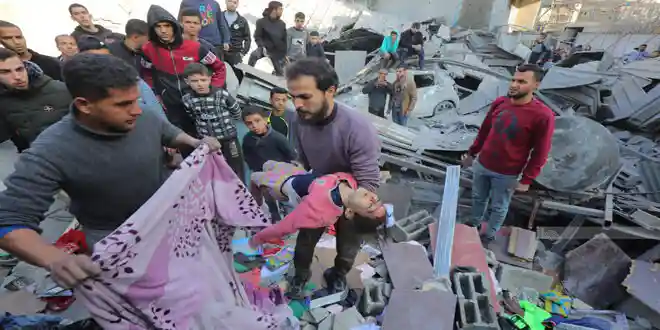
Although the Gaza conflict began in 2008, the peak of the Israeli–Gaza fighting began on October 7, 2023, after the militant group Hamas attempted to reclaim parts of their homeland. Israel, under the pretext of Hamas’s attack, began a war against Palestinian men, women, children, and the elderly, and the number killed up to the time of writing this article, according to official reports and reliable international sources, has reached more than 61,000. Of the dead, 18,000 were children and 28,000 were women and defenseless girls.
The blockade of Gaza by the Israeli army has closed all channels for delivering food and medicine, and the number of innocent children dying from malnutrition and lack of food is increasing daily.
It seems that modern humanity has never in any era been in such need of the appearance of the savior of the end times. A savior who will cut off the hands of the Zionist oppressors of Israel and their supporters. Just as the Prophet of Islam and the other Imams have foretold to the people of the world.
“… before the rise of Imam Mahdi, there will be numerous sudden deaths.”(5)
The expression “death” or “sudden deaths” is also mentioned in other hadiths from the Imams. Normally and in the ordinary course from the time of human creation until the emergence of new technologies such as cars and airplanes, human deaths occurred due to old age or incurable diseases or war, and generally with consequences that led one to expect death.
But the meaning of “sudden death” in hadith sources is death that occurs without illness or signs or prior warning and without events in which the death event would be expected, such as wars.
In such traditions it is noted that these deaths occur widely and in large numbers, not just in isolated cases.
Finding such instances in contemporary societies does not require deep investigation or studies. Our direct observations all indicate an increase in sudden death across societies regardless of age, whether in isolated cases such as heart and brain strokes, automobile or motorcycle accidents, or other means of transportation, deaths from weapons of all kinds, and also in collective events such as epidemics of deadly diseases like COVID-19, plane crashes, bus and train accidents, shipwrecks, major earthquakes, tsunamis, etc.
For example, one can cite the collision of two Boeing 747 passenger planes at Los Rodeos Airport in Tenerife, Spain, in 1977, which led to 583 deaths and is recorded as the highest number of fatalities in air accidents in history. Or the crash of another Boeing 747 belonging to Japan Airlines on Takama-ga-hara Mountain in 1985, which claimed 520 of its passengers.
Based on reports published by the Aviation Safety Network (ASN) and the B3A Research and Archive Organization, based in Switzerland, since 1920 to the present about 114,000 people have been killed in air collisions.


In 2004, a passenger train in Sri Lanka was struck by the tsunami, and 1,700 people died within minutes. This is recorded as the worst railway accident in history. In another railway accident in 1917 in Romania, nearly 1,000 people were killed.
The deadliest maritime disaster in history refers to the sinking of a German passenger ship in 1945 by a Soviet submarine, which resulted in 9,400 deaths. In the same year, another German ship sank, taking 7,000 lives. Despite technological progress, especially in the field of maritime travel,
maritime accidents still claim the lives of passengers. In 2004, the tsunami caused by the 9.0-magnitude earthquake in India, Japan, Thailand, Sri Lanka, Indonesia, and several other countries collectively swept 280,000 people to their deaths suddenly. In 1693, a tsunami in Sicily, Italy killed more than 60,000 people.
In 1976, a 7.5-magnitude earthquake in Tangshan, China killed 240,000 people. The 7.0-magnitude Haiti earthquake in 2010 killed more than 230,000 people. Perhaps one could say earthquakes are not a new disaster and have no relation to modern lifestyle or technological growth. Yes, that may be true. But we should not forget that almost all deaths from earthquakes occur due to debris from buildings—made of brick, cement, rebar, and steel—falling on people, and these structures are produced with modern technologies.
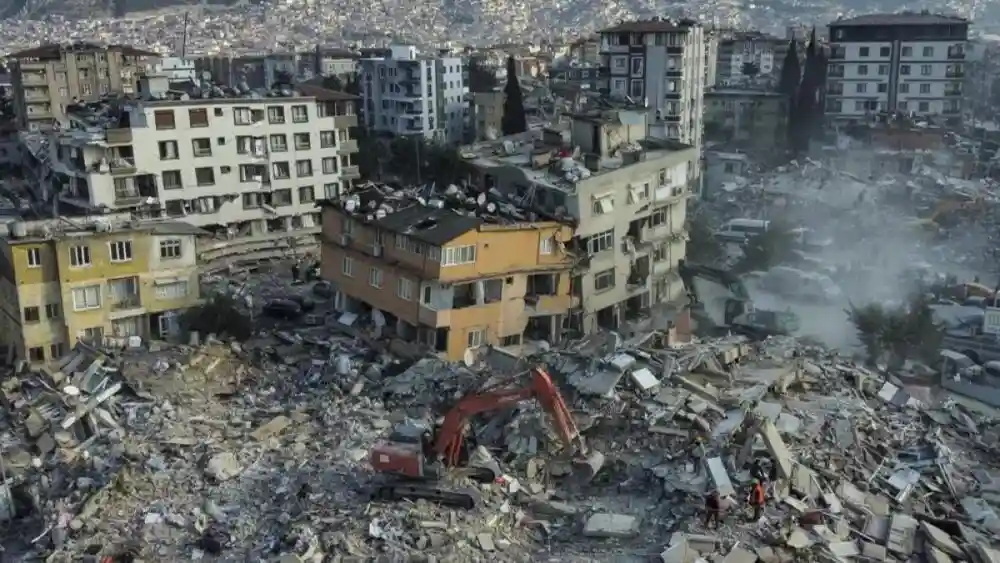
These are just examples of thousands of incidents that collectively wiped out millions of people in groups, without prior warning and suddenly from the face of the earth.
Regarding individual deaths, the death tolls are far more horrific than the figures above. The entry of illegal drugs into human societies, especially among young people and even adolescents, the consumption of non-standard alcoholic beverages, murders with cold and warm weapons, road and urban accidents leading to death, and so on—these are vivid examples of sudden deaths to such an extent that listing all of them is beyond the scope of this discussion. As a small example, know that in the United States alone between 1968 and 2025 more than 1.4 million people have been killed solely with firearms, which of course also includes suicides.
The death toll from road accidents is staggering. For example, between 1970 and 2020, more than 150,000 people in India, 120,000 in China, 100,000 in Brazil, 90,000 in the United States, and 80,000 in Mexico died, making them the top five countries with the highest fatalities from road traffic accidents.
The above statistics are small samples of sudden deaths within limited timeframes, which our Imams have described as one of the signs of the end times. Unfortunately, modern lifestyle today, and the widespread pollution of a large swath of youth in various countries by various industrial drugs and psychotropics, the weapon industry mafia in the United States and other countries, and many other factors have contributed to the daily increase in fatal deaths.
“An affair to which you have fixed your eyes (the appearance of our Mahdi) will not be realized except after the emergence of the following signs: believers and Muslims turn away from their brother; spittle is thrown into each other’s faces; some bear witness to the disbelief of some, and others to the disbelief of different people; some Muslims curse other Muslims. I said: Then there will be no good in this time? He replied: Not so; all the good and blessings are in this time; for our Mahdi will rise and remove all the reprehensible qualities that have been mentioned.”(6)
Disunity and schism among Muslims unfortunately began immediately after the death of the Prophet Muhammad (peace be upon him) and with the usurpation of the governance of Imam Ali. A number, following the public announcement of the Prophet two months before his death in a place called Ghadeer Khumm, in the presence of more than one hundred thousand Muslims, regarding the leadership of Imam Ali over all Muslims after the Prophet, rose in allegiance to Imam Ali; others, due to allegiance to ethnicity and many more out of fear of the swords and violence of the usurpers of the government, concealed his leadership.
The fire of this discord burned brighter day by day to the extent that the blood and honor of the followers of Imam Ali throughout history were repeatedly deemed lawful to shed, and many of his Shiites fell to the earth in blood. The climax of these disagreements and hostilities began when a new sect called Wahhabism, branching from the Hanbali school(7)), was formed by a man named Muhammad ibn Abd al-Wahhab under the teachings of a very extremist figure named Ibn Taymiyya in 1744. Although for many years it did not achieve much success in attracting public opinion, it gradually gained more followers and, with the proclamation of the Kingdom of Saudi Arabia in 1932 and a treaty previously made with the "Al Saud" family, reached its zenith and was declared the official religion of Saudi Arabia.
Wahhabis not only condemn Shia Muslims but even the four mainstream Sunni madhhabs as infidels. In other words, they regard them as kafir. Yet the spearhead of their enmity is directed more toward the Shia. Muhammad ibn Abd al-Wahhab, since he considered the practice of making the Prophet Muhammad and the twelve Imams of the Shia intermediaries to supplicate to God as a form of shirk and disbelief, declared: “Indeed their (the Shiites’) aim to draw near to God by making intermediaries of the prophets and the righteous, and for this reason their blood is lawful and killing them is permissible”(8)). This seemingly simple statement has led to harsh and even bloody stances by the Wahhabis toward the Shia across centuries.
Extreme militant-political groups such as Al-Qaeda, ISIS, and the Taliban, although not officially regarded as branches of Wahhabism, have each, in some way, drawn on Wahhabi teachings or used Abdul Wahhab’s fatwas as a pretext to advance their goal.
According to official statistics released by the Iraq Body Count project, between 2014 and 2016, at least 25,645 Iraqi civilians were killed by ISIS. Various reports estimate that the United Nations has reported tens of thousands of deaths in Iraq and Syria. Many of the victims were brutally beheaded or burned alive.
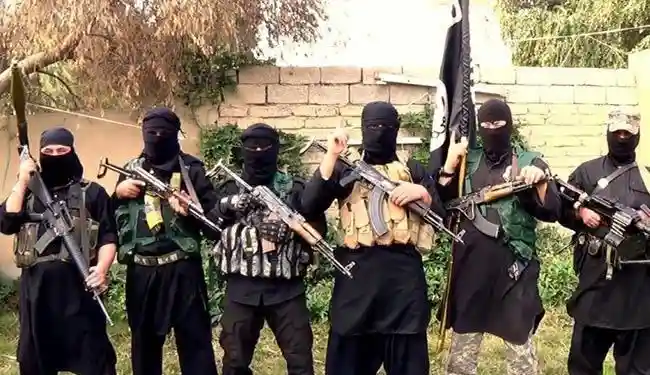
Accurate figures for the number of people killed by Al-Qaeda and the Taliban are not available, but reports and scattered news indicate a very high number of acts of violence and massacres against Muslims and Christians by these groups.
According to the aforementioned hadith from Imam Hasan (peace be upon him), the extent of takfir and enmity that has led to the massacre of many Muslims around the world indicates the approach of the time of Imam Mahdi's emergence. Imam Hasan explicitly stated that despite all the calamities and hostilities among Muslims, a great good is on its way, which is the appearance of Imam Mahdi.
Footnotes:
1. Refer to to the fourteen infallibles: the prophet Muhammad, his doughter Fatimah, and the twelve Imams from his household.
2. Allameh Majlisi, Bihar al-Anwar, Vol. 52, p. 220.
3. Sheikh Saduq, Kitab al-Kamal fi al-Din wa al-Tama’ah, Vol. 1, p. 68, quoting Imam Ja‘far al-Sadiq – Nu‘mani, Al-Ghaybah, Vol. 2, p. 300, Hadith 111, quoting the Prophet Muhammad and Imam Muhammad al-Baqir.
4. (britannica.com, cfr.org).
5. Allameh Majlisi, Bihar al-Anwar, Vol. 52, p. 257.
6. Nu‘mani, Al-Ghaybah, Chapter on Signs and Hardships before the Appearance – also Bihar al-Anwar, Vol. 52, p. 211.
7. The four Sunni schools of thought are: Hanafi, Hanbali, Maliki, and Shafi‘i.
8. Muhammad ibn Abd al-Wahhab, Kashf al-Shubuhat, p. 58, Dar al-Qalam, Beirut.
